Building date: 1852, now demolished. Glenn Hinchey states 1845. "Cobblestone Buildings in Onondaga County", 1992, Structure No. 27, compiled by Glenn Hinchey.
Original use:
Corner structures:
Mortar application and content:
Types and uses of stones:
Types and choice of windows:
Structures with similar masonry details:
Masons who worked on building:
Unique features:
Map views courtesy Google Maps. Current street level view of Maria Regina College is shown. Address is Google Earth confirmed; 43°04'30.28"N 76°09'07.13"W.
City of Syracuse and Onondaga County Maps
The Elijah Clark house at 1024 Court St., Syracuse was built in 1852 in Gothic style. The building became part of St. Anthony's Convent which later in 1934 became Maria Regina College, junior college for women, closing in 1990. The building was demolished.
The house is said to be still standing (1992), but has been completely absorbed with the building of Maria Regina College. "Cobblestone Buildings in Onondaga County", 1992, Structure No. 27, compiled by Glenn Hinchey.
St. Anthony's Convent
This Gothic cottage style cobblestone house at 1024 Court Street, Syracuse was built about 1852 by Elijah Clark, a local farmer and city property assessor. In 1864 the house and the chapel attached on the right were part of a property sale to the Sisters of the Third Order St. Francis for $7,500, and became the first St. Anthony Motherhouse and chapel. The Sisters replaced the chapel with a larger one in 1879 and demolished Clark's cobblestone house in 1896, using the leftover stones to erect a stable and barn which was demolished in 1959. The Sisters are known locally for operating Maria Regina College, an outgrowth of their Sisters' Teacher Training/Normal School which they had established in 1905 on Court Street. Clark was born in the town of Onondaga in 1803 and later served as a trustee for the Village of Salina and as a property assessor for the City of Syracuse. He died in East Syracuse in April 1889.
During Sister Leadership meetings held in May 1864 and November 1864, the Sisters voted to buy "...new pews for the chapel of St. Anthony Convent". The Sisters had only just moved in the house on June 13 1864, and there is proof in other meetings that they had already overextended their finances on property purchases and jumpstarting ministries, so I think it would be unlikely that they could also afford to build a brick chapel. I am attaching 2 photos of chapel interiors that also seem to support this theory. Note how in the suspected 1864-1878 chapel there are windows on only one side of the chapel, which is consistent with how the chapel appears to be attached to the cobblestone house in the 1864-1878 photo. Then note how in the 1879 chapel there are windows on both sides. That chapel wasn't attached to any structure, because when the cobblestone house was demolished in 1896, it would have suffered structural damage (which it didn't). Richard Palmer blog.
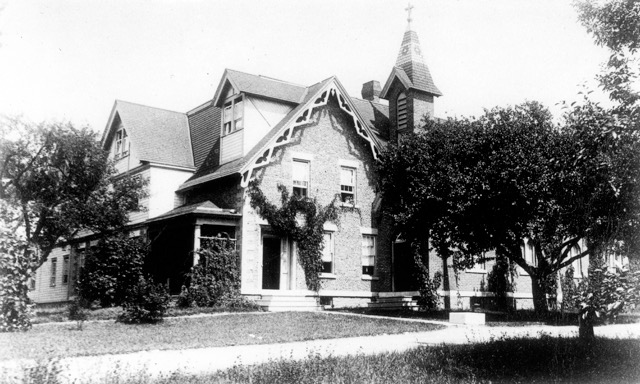 13015C Salina Block 101 St. Anthony's Convent 1887_300.jpg ¹ St. Anthony's Convent 1887 | 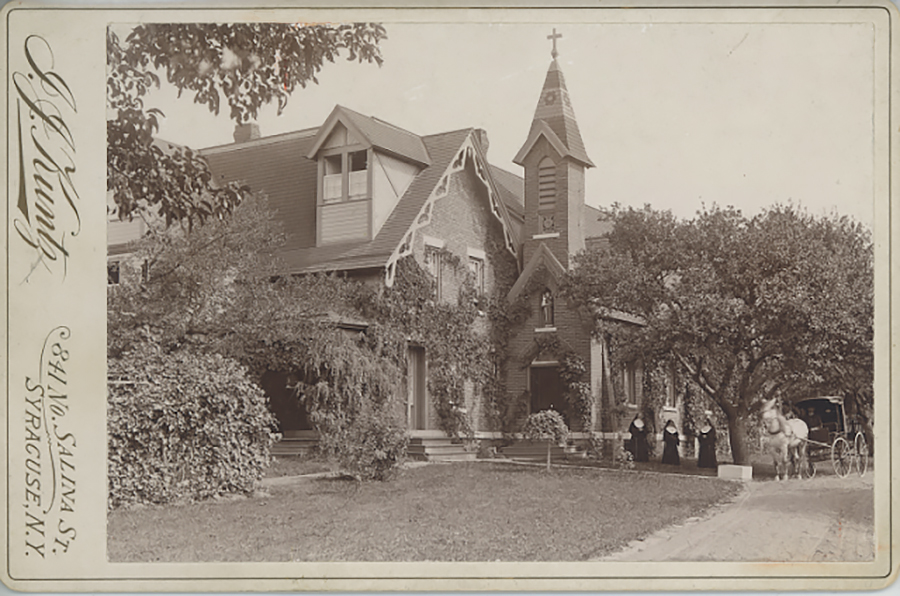 Clark House Syracuse.jpg ¹ | 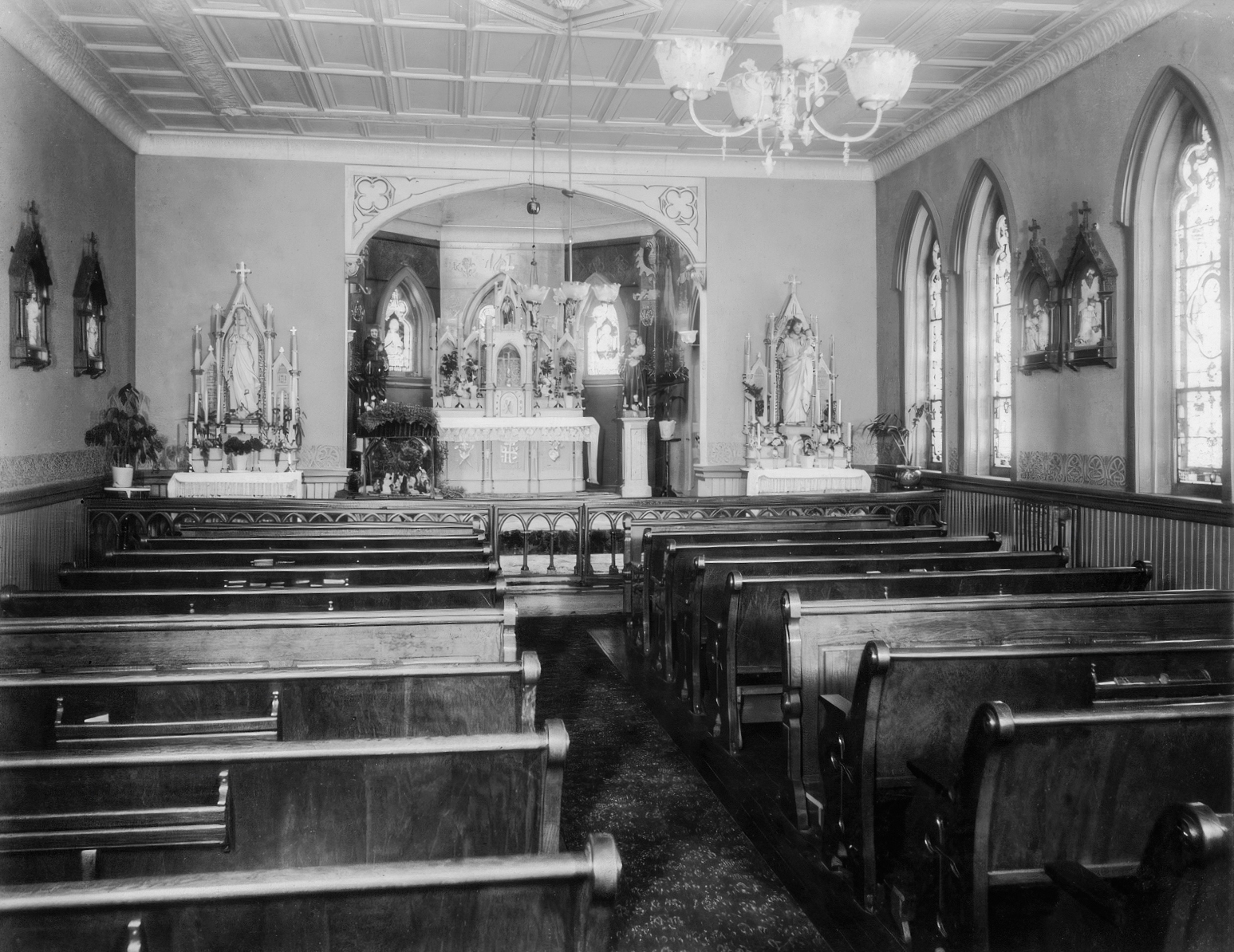 Screen Shot 2019-09-14.jpg ¹ |
¹ Image courtesy Sisters of St. Francis Archives, Syracuse.
